


Could Insulin Resistance Be Affecting Your Acne?

Insulin resistance is a condition where your body becomes less sensitive to insulin, the hormone responsible for regulating blood sugar - and it’s such a common cause of acne. To compensate for the resistance, your body produces more insulin which is when we start to see the effects on your skin.
Higher insulin levels can stimulate increased oil production and raise androgen levels (male hormones like testosterone). And as we know, more oil + more hormonal stimulation = a much higher likelihood of breakouts.
So while it might seem like your acne is purely a skin issue, in many cases, it’s actually being influenced by what’s happening internally.

How Insulin Resistance Can Trigger Acne
In my experience, this is one of the most overlooked drivers of persistent acne, particularly in adults, but I also see it in teens with more stubborn or inflammatory breakouts.
When insulin is consistently elevated, it can:
Increase sebum (oil) production
Stimulate androgen (testosterone) activity
Contribute to clogged pores
Drive inflammation in the body
Slow down skin healing
I often explain it to clients like this: your skin is responding to a hormonal and internal environment, not just what you’re putting on it.
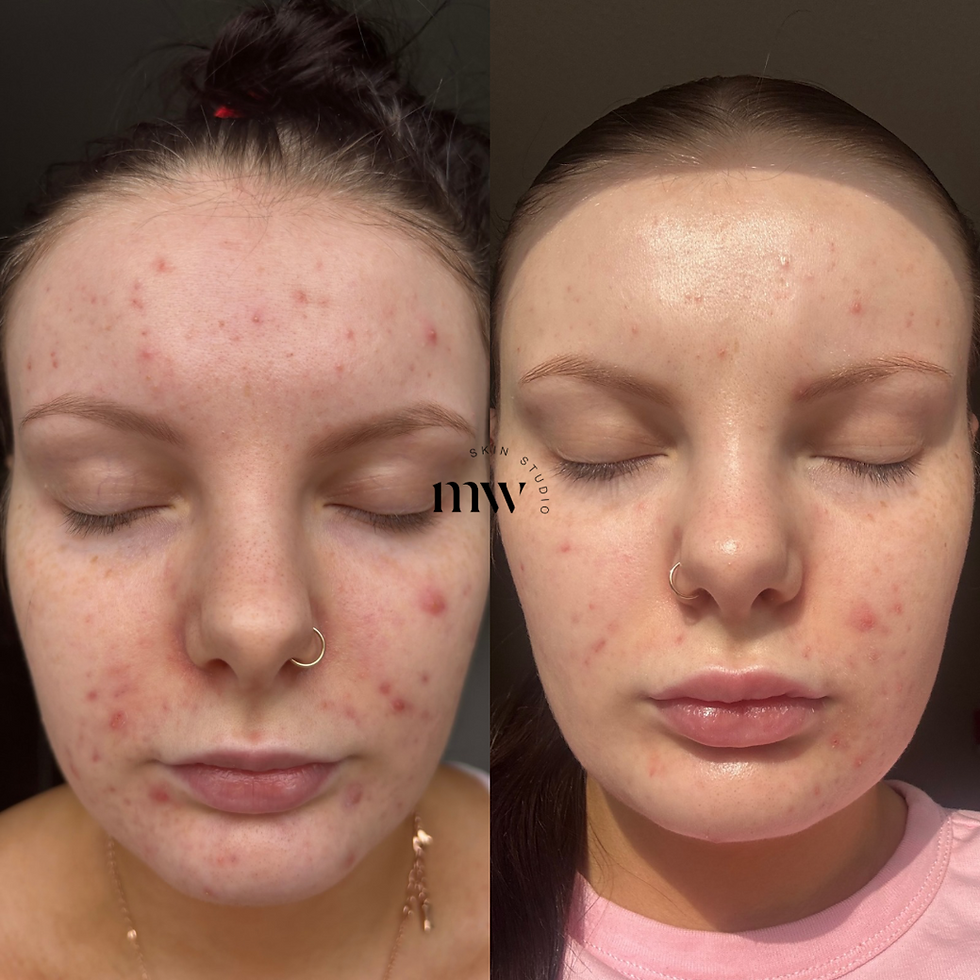
One client I worked with had been on multiple topical treatments and antibiotics, but her acne kept returning. When we looked a little deeper, her blood sugar was fluctuating massively throughout the day due to lots of skipping meals, relying on coffee, then reaching for sugar in the afternoon. Once we stabilised that, her skin became significantly calmer within weeks.

Signs Insulin Resistance Might Be Affecting Your Skin
It’s not always obvious, but there are certain patterns I look for when I suspect insulin resistance could be playing a role.
Acne that’s persistent and inflammatory, often around the lower face
Breakouts that don’t respond well to topical treatments alone
Energy crashes, especially in the afternoon
Strong cravings for sugar or refined carbs
Feeling “shaky” or irritable when you haven’t eaten
Difficulty losing weight or holding onto weight easily
Acne alongside conditions like PCOS
You don’t need to have all of these, but when I see a few together it’s usually worth exploring further.
The Link Between Blood Sugar Spikes and Breakouts
Every time your blood sugar spikes quickly - like after sugary foods, refined carbs, or skipping meals - your body releases insulin to bring it back down. The bigger the spike, the bigger the insulin response.
Over time, this pattern can lead to both insulin resistance which means more frequent acne flare ups!
This is something I see a lot in people with busy lifestyles, as they’re much more likely to have irregular eating schedules, grabbing quick snacks, rely on caffeine. It also crops up a lot during holidays like Christmas (which we’ve already talked about here), where sugar intake naturally increases.
As always, I will never tell people to remove the joy of sugar completely - we still want to live! It’s about how we support the body around them.
How to Support Insulin Resistance for Clearer Skin
This is where I always like to simplify things, so it doesn’t feel overwhelming. In my experience, the biggest shifts come from consistency with a few key habits anyway.
Eating regularly is one of the most important. Skipping meals puts stress on the body and makes blood sugar regulation much harder. Aim for three balanced meals a day, including protein and healthy fats to slow glucose release.
Pairing carbohydrates with fats or protein also makes a huge difference. This helps reduce spikes, so instead of your blood sugar shooting up and crashing, it stays more stable.
Sleep is another big one. Poor sleep increases insulin resistance and cortisol, both of which can worsen acne. It’s one of the first things I look at with clients.
And then there’s stress. Chronic stress raises cortisol, which can worsen blood sugar control, so the two often go hand in hand.
This isn’t about being perfect. It’s about creating a more stable internal environment, where your skin has a chance to settle.
Why This Isn’t Just About Cutting Out Sugar
I want to be really clear on this - this is not about restriction.
In fact, strict diets often make things worse long term! They increase stress, disrupt hormones, and aren’t sustainable.
What I focus on instead is:
Supporting blood sugar balance
Adding in the right nutrients
Creating structure and consistency
Helping clients understand why their skin is reacting
You can absolutely enjoy food and support your skin at the same time. It just requires a slightly different approach.
What I Look at in Clinic And How I Can Help You
When someone comes to me with acne that isn’t improving, I’m not just looking at their skincare.
We’re looking at:
Blood sugar patterns
Hormonal health
Diet and lifestyle
Stress levels
Sleep quality
Medical history
Because acne is never just one thing.
In a Virtual Consultation, we go through all of this together and create a plan that actually fits your life, not something generic or restrictive.
And if you’re ready for more in-depth support, my 12 Week Programme is designed to help you rebalance everything from the inside out, including blood sugar, hormones, and skin health.

If This Feels Familiar, Trust That
If you’re reading this and thinking “this actually sounds like me”, trust that instinct!
In my experience, when clients start to understand the link between blood sugar, insulin, and their skin, things begin to make a lot more sense. And from there, we can start making changes that actually last.
Let’s support your skin properly, from the inside out.


This article is a good resource for anyone wanting to explore the topic. I appreciated the clarity with which the data and information are presented. I reread some parts a few times to make sure I understood well. It is not common to find articles that manage to cover this topic so well.